Median Age
47 Years
Largest Age Group
60-69 Years
Approximately 16% of Residents
Under 20
20%
Over 65
26%

Area Guide
Squam Lake may be the most famous lake in New Hampshire, but it's Bristol, sitting at the edge of Newfound Lake, that quietly earns a reputation as one of the state's most livable small towns. The town center has an old-fashioned, walkable feel, with local shops, a diner, and a common green anchoring daily life. Bristol sits in the Lakes Region of central New Hampshire, where access to outdoor recreation is built into the rhythm of every season, from summer swimming and boating to winter snowshoeing across wooded trails.
The local economy draws on a mix of small businesses, light manufacturing, and the steady pull of tourism tied to Newfound Lake, one of the cleanest lakes in the country. Plymouth State University is just a short drive up Route 3 in Plymouth, bringing educational and cultural energy to the surrounding region. Bristol's neighborhoods range from in-town rentals close to Central Square to more spread-out settings near the lake and surrounding hills.
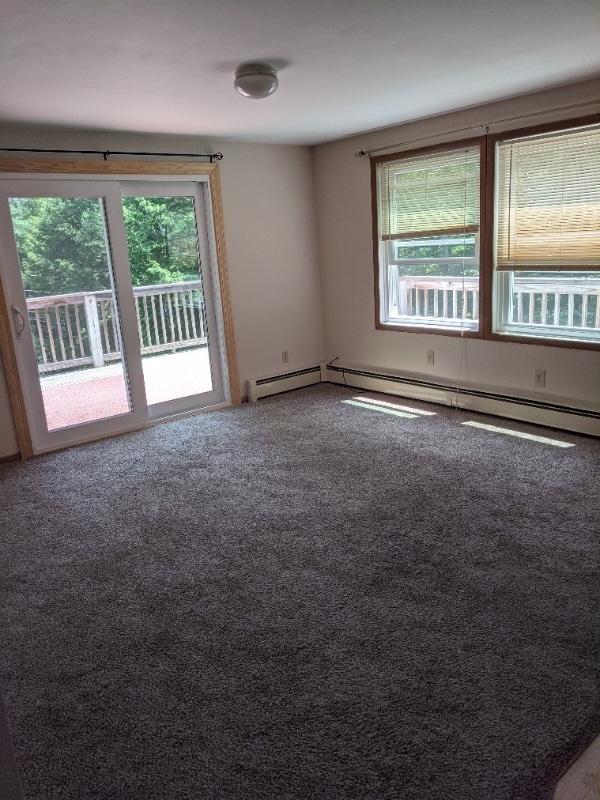
The rental market here leans toward single-family homes, converted multifamily houses, and smaller apartment communities tucked into residential streets. Options tend to feel grounded and unpretentious, fitting for a town where the pace is deliberate and the scenery does most of the talking.
Median Household Income
$68,853
Average: $73,607
Education
460
Residents Have a Degree
Job Market
1,085
Workers Employed
Median Age
47 Years
Largest Age Group
60-69 Years
Approximately 16% of Residents
Under 20
20%
Over 65
26%
Housing Distribution
Bristol has more homeowners than renters.

Education Distribution
Review this city's overall education levels.

Explore how walkable, bikeable, drivable, and transit-friendly Bristol, NH is for everyday living.
Not Walkable
Walkability
Exceptionally Drivable
Drivability
Not Bikeable
Bikeability

Public
Grades K-5
188 Students

Newfound Memorial Middle School
Public
Grades 6-8
287 Students
Public
Grades 9-12
377 Students

 The GreatSchools Rating helps parents compare schools within a state based on a variety of school quality indicators and provides a helpful picture of how effectively each school serves all of its students. Ratings are on a scale of 1 (below average) to 10 (above average) and can include test scores, college readiness, academic progress, advanced courses, equity, discipline and attendance data. We also advise parents to visit schools, consider other information on school performance and programs, and consider family needs as part of the school selection process.
View GreatSchools Rating Methodology
Data provided by
GreatSchools.org
© 2026. All rights reserved.
The GreatSchools Rating helps parents compare schools within a state based on a variety of school quality indicators and provides a helpful picture of how effectively each school serves all of its students. Ratings are on a scale of 1 (below average) to 10 (above average) and can include test scores, college readiness, academic progress, advanced courses, equity, discipline and attendance data. We also advise parents to visit schools, consider other information on school performance and programs, and consider family needs as part of the school selection process.
View GreatSchools Rating Methodology
Data provided by
GreatSchools.org
© 2026. All rights reserved.
† Our analysis of utilities, groceries, transportation, healthcare, home prices, and other goods and services is sourced from the Cost of Living Index, a respected benchmark published by the Council for Community and Economic Research (C2ER) that provides a thorough overview of living expenses across different regions.
Rent data is provided by CoStar Group’s Market Trend reports. As the industry leader in commercial real estate information, analytics, and news, CoStar conducts extensive research to produce and maintain a comprehensive database of commercial real estate information. We combine this data with public record to provide the most up-to-date rental information available.
Consumer goods, services, and home prices are sourced from the Cost of Living Index published by the Council for Community and Economic Research (C2ER). The data on this page is updated quarterly. It was last published in February 2026.
Demographic information comes from Neustar and combines detailed address data with U.S. Census and American Community Survey statistics to produce reliable local estimates.