Median Age
45 Years
Largest Age Group
30-39 Years
Approximately 15% of Residents
Under 20
18%
Over 65
24%




Avg Rent
$3,021
Population
33,655
Renter Mix
45% Rent
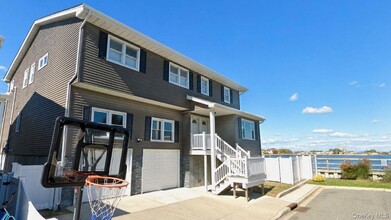
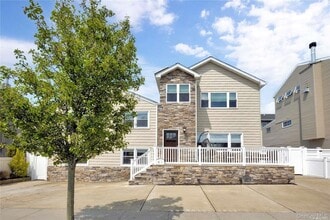
Long Beach earns its nickname, "The City by the Sea," by sitting on a narrow barrier island off Long Island's South Shore, where the Atlantic Ocean lines one edge and Reynolds Channel wraps the other three sides. The city was incorporated in 1922 and carries a long history as a coastal retreat, drawing notable residents like Humphrey Bogart and Jack Dempsey during the 1940s. Today, its compact three square miles pack in a rebuilt 2.2-mile boardwalk, a walkable downtown along Park Avenue, and a distinct neighborhood variety that runs from the bungalow-lined West End to the quieter, bay-facing blocks of the Canals area.
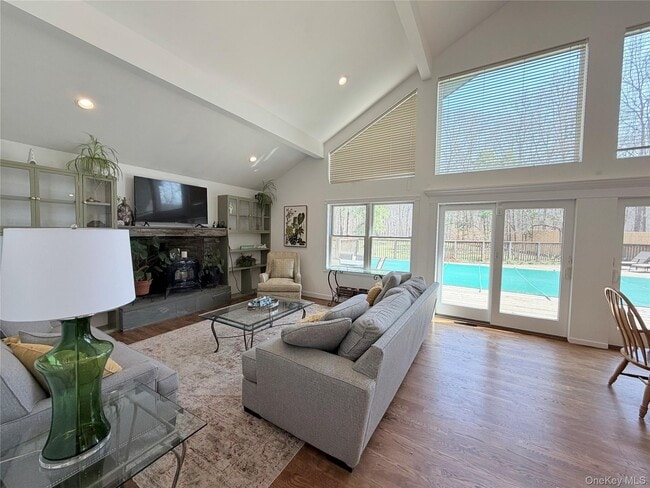
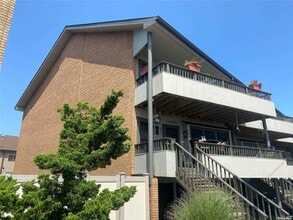
Renters here find a mix of apartment communities near the boardwalk, classic beach bungalows, and single-family homes across the East End. The Long Island Rail Road terminal connects the city to Penn Station in roughly an hour, making it a genuine option for those who want coastal living without giving up access to New York City. The annual Long Beach International Film Festival and summer concert series on the sand give the city a cultural pulse that goes well beyond its beach-town reputation.
People walking
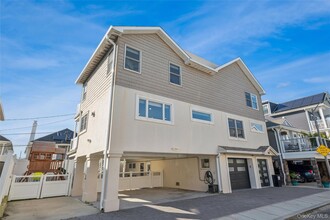
Street view
overview of neighborhood
The Long Beach branch of the Long Island Rail Road starts and ends in Long Beach, NY.
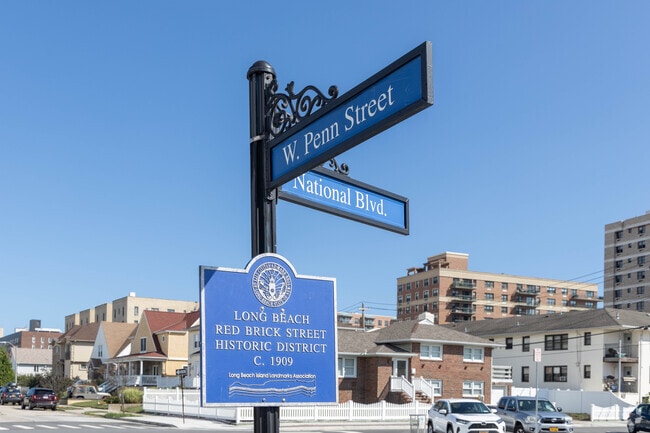
The Long Beach, NY Red Brick Street Historic DIstrict has homes dating back to the early 1900's.
Median Household Income
$116,242
Average: $140,571
Education
14,798
Residents Have a Degree
Job Market
19,505
Workers Employed
Median Age
45 Years
Largest Age Group
30-39 Years
Approximately 15% of Residents
Under 20
18%
Over 65
24%
Housing Distribution
Long Beach has more homeowners than renters.

Education Distribution
Review this city's overall education levels.

As of April 2026, the average apartment rent in Long Beach, NY is $2,204 for a studio, $3,000 for one bedroom, $4,345 for two bedrooms, and $5,521 for three bedrooms. Apartment rent in Long Beach has increased by 1.1% in the past year.
Explore how walkable, bikeable, drivable, and transit-friendly Long Beach, NY is for everyday living.
Exceptionally Walkable
Walkability
Good Public Transit
Transit
Moderately Drivable
Drivability
Fairly Bikeable
Bikeability

Public
Grades PK-5
468 Students

Public
Grades PK-5
340 Students

Public
Grades K-5
271 Students
Public
Grades K-5
462 Students

Public
Grades 6-8
664 Students

Public
Grades 9-12
1,252 Students
 The GreatSchools Rating helps parents compare schools within a state based on a variety of school quality indicators and provides a helpful picture of how effectively each school serves all of its students. Ratings are on a scale of 1 (below average) to 10 (above average) and can include test scores, college readiness, academic progress, advanced courses, equity, discipline and attendance data. We also advise parents to visit schools, consider other information on school performance and programs, and consider family needs as part of the school selection process.
View GreatSchools Rating Methodology
Data provided by
GreatSchools.org
© 2026. All rights reserved.
The GreatSchools Rating helps parents compare schools within a state based on a variety of school quality indicators and provides a helpful picture of how effectively each school serves all of its students. Ratings are on a scale of 1 (below average) to 10 (above average) and can include test scores, college readiness, academic progress, advanced courses, equity, discipline and attendance data. We also advise parents to visit schools, consider other information on school performance and programs, and consider family needs as part of the school selection process.
View GreatSchools Rating Methodology
Data provided by
GreatSchools.org
© 2026. All rights reserved.
† Our analysis of utilities, groceries, transportation, healthcare, home prices, and other goods and services is sourced from the Cost of Living Index, a respected benchmark published by the Council for Community and Economic Research (C2ER) that provides a thorough overview of living expenses across different regions.
Rent data is provided by CoStar Group’s Market Trend reports. As the industry leader in commercial real estate information, analytics, and news, CoStar conducts extensive research to produce and maintain a comprehensive database of commercial real estate information. We combine this data with public record to provide the most up-to-date rental information available.
Consumer goods, services, and home prices are sourced from the Cost of Living Index published by the Council for Community and Economic Research (C2ER). The data on this page is updated quarterly. It was last published in February 2026.
Demographic information comes from Neustar and combines detailed address data with U.S. Census and American Community Survey statistics to produce reliable local estimates.